A lonely mooring buoy struggles erratically against the
ocean's current, desperate to escape a fate chained forever to the
seafloor. I try to claim it down; but, not used to human company, it rejects me
violently into the sea. Patiently in the splash I float, waiting for the buoy
to settle.
Eventually its suspicions calm and I’m allowed to climb
onboard. Together, we watch sails dart across the harbour and out in front, on the distant shores of Nielson Park, crowds that crawl like ants.
I’ve swum out from the wharf at Clifton Gardens, the lower
north shore’s own answer to Nielson Park, a close competitor for Sydney’s best year-round
coastal retreat. It’s a beloved
spot for both leisure and recreation. Yet, growing up in the Eastern Suburbs,
a far trek to the other side of the bridge, I didn’t even know it existed.
Maybe locals like it that way, a closely guarded secret. Maybe they don’t want others to know
of their tidal bath swims in water that glints on the harbour. Maybe
they don’t want others to impede their way as they plunge in from the jetty. Maybe
they’d rather their spots on the sand free to tan and watch toddlers build sandcastles.
Or perhaps
they’d prefer Clifton Gardens’ parks vacant for their own Sunday afternoon picnics
– and the basketball court and cricket pitch empty for only themselves to enjoy.
Or it’s possible they’d loathe if large crowds were to plague their favourite
seaside cafés and eateries - housed in historic sandstone buildings.
 |
| Clifton Gardens |
Or it could
just be I never bothered to look at a map. Situated
along the coastal walk between
Taronga Zoo and Balmoral, I guess it’s not that much of a secret. Still, it’s
hard not to feel like I’ve stumbled upon something special.
The beach itself
is enclosed by bush-covered headlands, backed by dense and vibrant vegetation that
teems with squawking birdlife. Coming by car, it’s concealed in a maze of
suburban side streets that cut into the rockface. Leave the city behind as you twist
your way down and enter the hidden sanctuary. A perfect place to wind the day
away.
 |
| Clifton Gardens |
Yet, I don’t
plan to stay here for too long today, with still plenty nearby to discover. It
gets even more secluded, or so I’ve been told, along the track south-east towards
Bradleys Head and the zoo.
Along graded gravel and limestone steps, the track cuts
through the bushland slopes of Sydney Harbour National Park, fringing the
V-shaped Taylors Bay. A secret side-track down to the bay is easy to miss but definitely
worth to look out for.
I find it eventually underneath spreading ferns, guarded intently
by a water dragon. But my startled foe knows it’s no match for a fully grown
man and quickly abandons post. Victorious, I waste no time to disappear down
the track before the reptile returns with more troops.
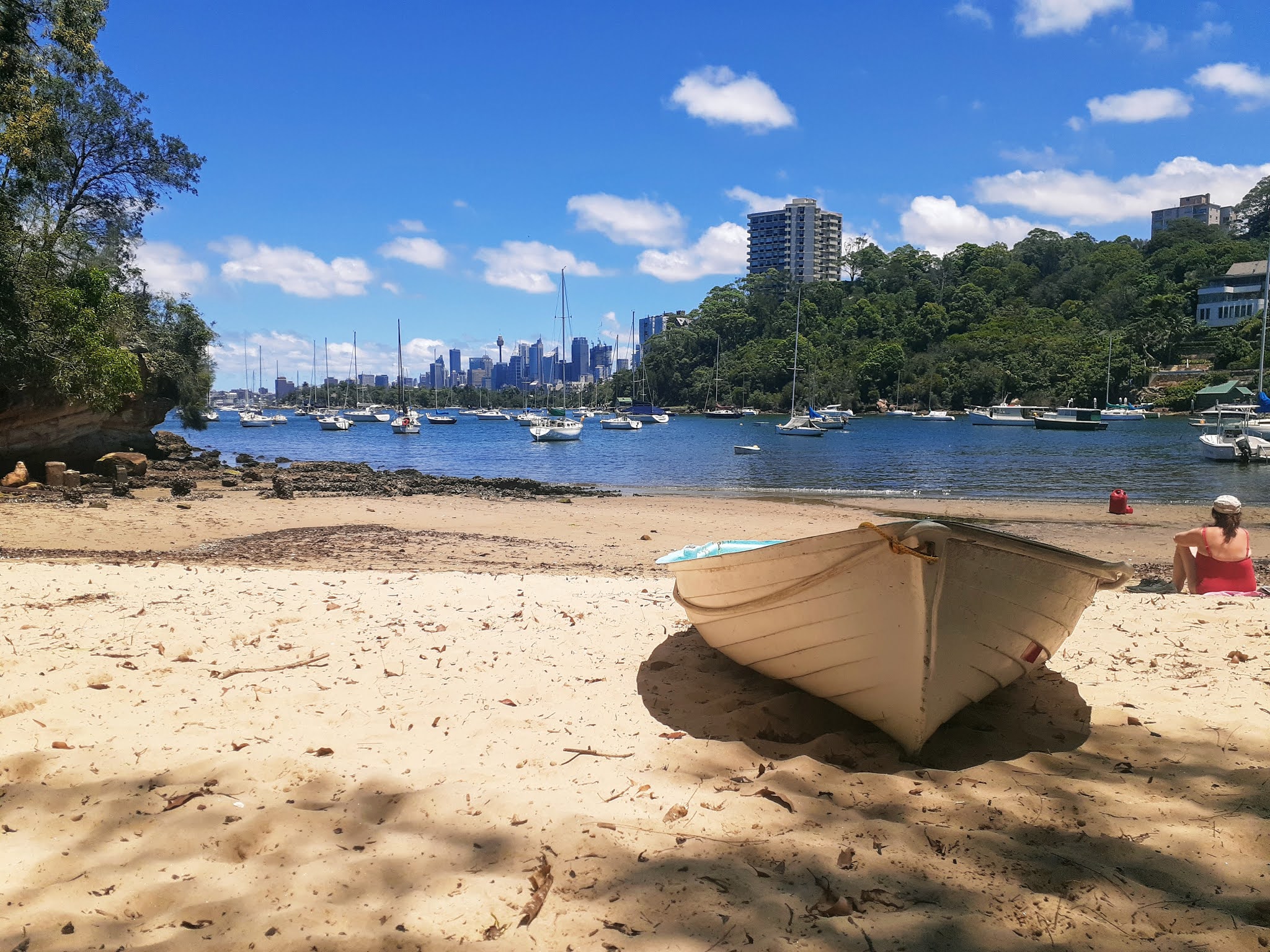
The plant life soon opens to a trail of discarded dinghies
down to rocks by deep, emerald water. The bay is empty save a few sleepy
anchored boats bobbing on the sea.
There are times it hasn’t been so quiet. One fateful night,
31 May 1942, a Japanese midget submarine was sunk on the seabed here during what
has come to be known as ‘the battle of Sydney’. It was one of three submarines of its kind launched from
larger submarines off the coast into Sydney Harbour intent on attacking anchored
Allied warships. All three enemy submarines were discovered and destroyed.
Today, it’s a peaceful bay, with two private beaches all to
myself. At the first beach, at the bay’s northern apex, a small creek trickles
calmly down the slope of greenery before cutting across the shore. I dip my toes
in, but, too cold, they immediately seek respite in a blanket of soft, warm
sand.
 |
| Taylors Bay |
The seawater is warmer too, and shallow enough to walk out
far into the bay. In doing so, the second beach soon comes into sight, sheltered
underneath the gums of Ashton Reserve, bordered by the bay’s western rocky
shore.
I start to wade my way over, but a misguided foot upsets a
slimy, camouflaged stingray. Oyster covered rocks are my only escape from an
indignant attempt at a sting. The piercing of the oysters’ shells may not be
too much better, but this route will have to do.
Slowly over greasy, green sea moss and squelchy sea grapes,
I reach the second beach. The 50-metre
strip of narrow sandflats sits precariously on the bay; half-buried boulders
peek through, threatening to swallow it whole. Intimidated, the beach retreats
into the shadows of overreaching branches. Ropes fall from one such sturdy gum
to hang a concrete seat, a DIY construction. An invitation to swing the time
away.
 |
| Taylors Bay |
Following the rocks further along from here will lead to
Bradleys Head and the beaches of Athol Bay. But by now the looming tide is
likely to leave me stranded if I attempt to carry on. It will have to wait for
another day.
Total Beaches: 63/179